Summon a mind
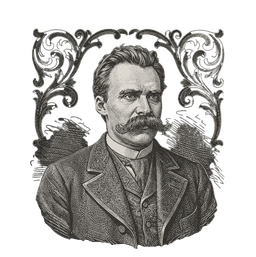
Friedrich Nietzsche
1844–1900
He declared the death of God and meant it as a beginning. Nietzsche dismantles inherited values to ask what a human being might become without them.
Friedrich Nietzsche
Nietzsche diagnosed modern culture as spiritually bankrupt after the collapse of religious certainty. His concepts — the will to power, eternal recurrence, the Übermensch — are not doctrines but provocations. He wanted to shatter comfortable assumptions and force a reckoning with what we truly value.
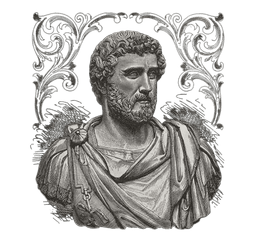
Marcus Aurelius
121–180 AD
He ruled an empire but wrote only to govern himself — reflections on duty, impermanence, and the discipline of the inner life.
Marcus Aurelius
Marcus Aurelius was the last of the Five Good Emperors and a devoted Stoic. His private journal, Meditations, was never meant for publication — it was a daily practice of self-correction. He reminds us that the obstacle is the way, and that the mind, not circumstance, determines our suffering.
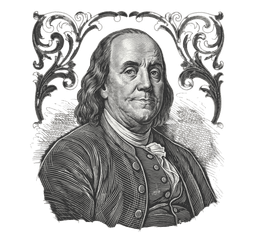
Benjamin Franklin
1706–1790
He flew a kite in a thunderstorm, wrote almanacs for tradesmen, and helped found a republic — always asking what was useful, what was true, and what might be improved.
Benjamin Franklin
Franklin rose from a Boston candle-maker's son to America's most celebrated citizen by doing one thing well: paying attention. He invented bifocals, mapped the Gulf Stream, and helped found a republic — not as separate projects but as expressions of the same practical curiosity. Poor Richard's Almanack reached more households than any other text in colonial America.
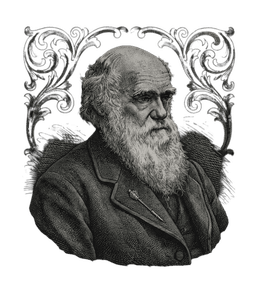
Charles Darwin
1809–1882
He spent five years circling the globe and twenty more circling his own conclusion — that all life descends, branching and competing, from common ancestors.
Charles Darwin
Darwin's voyage aboard HMS Beagle gave him the raw material for a theory he sat on for two decades, wary of the storm it would unleash. On the Origin of Species argued that the staggering variety of life arises not from design but from natural selection acting on small inherited variations. He was a patient, exhaustive observer who trusted accumulated evidence over intuition, and who knew his idea would unsettle far more than biology.
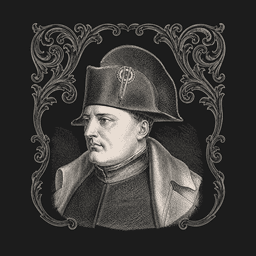
Napoleon Bonaparte
1769–1821
He crowned himself, redrew the map of Europe, and wrote a code of law that outlived every battle he won — never finding the line where audacity ended and ruin began.
Napoleon Bonaparte
A Corsican artillery officer who rose through the chaos of the French Revolution to crown himself Emperor, Napoleon remade France — its laws, its schools, its whole administration — even as his armies remade the map of Europe. Then Spain bled him, Russia broke him, and Waterloo finished him. From exile he dictated his own legend, certain his true monument was the Civil Code, not the battles.
Mahatma Gandhi
1869–1948
He challenged an empire with a spinning wheel, a fast, and a refusal to hate — and held himself to every standard he asked of a nation, failures confessed in print.
Mahatma Gandhi
A shy London-trained lawyer, Gandhi forged satyagraha — resistance by truth and non-violence — in two decades in South Africa, then led India against British rule. He spun his own cloth, fasted to stop violence, and confessed his failures in print, though his early South African writings demeaned Black Africans. He saw independence in 1947 and was assassinated in 1948.